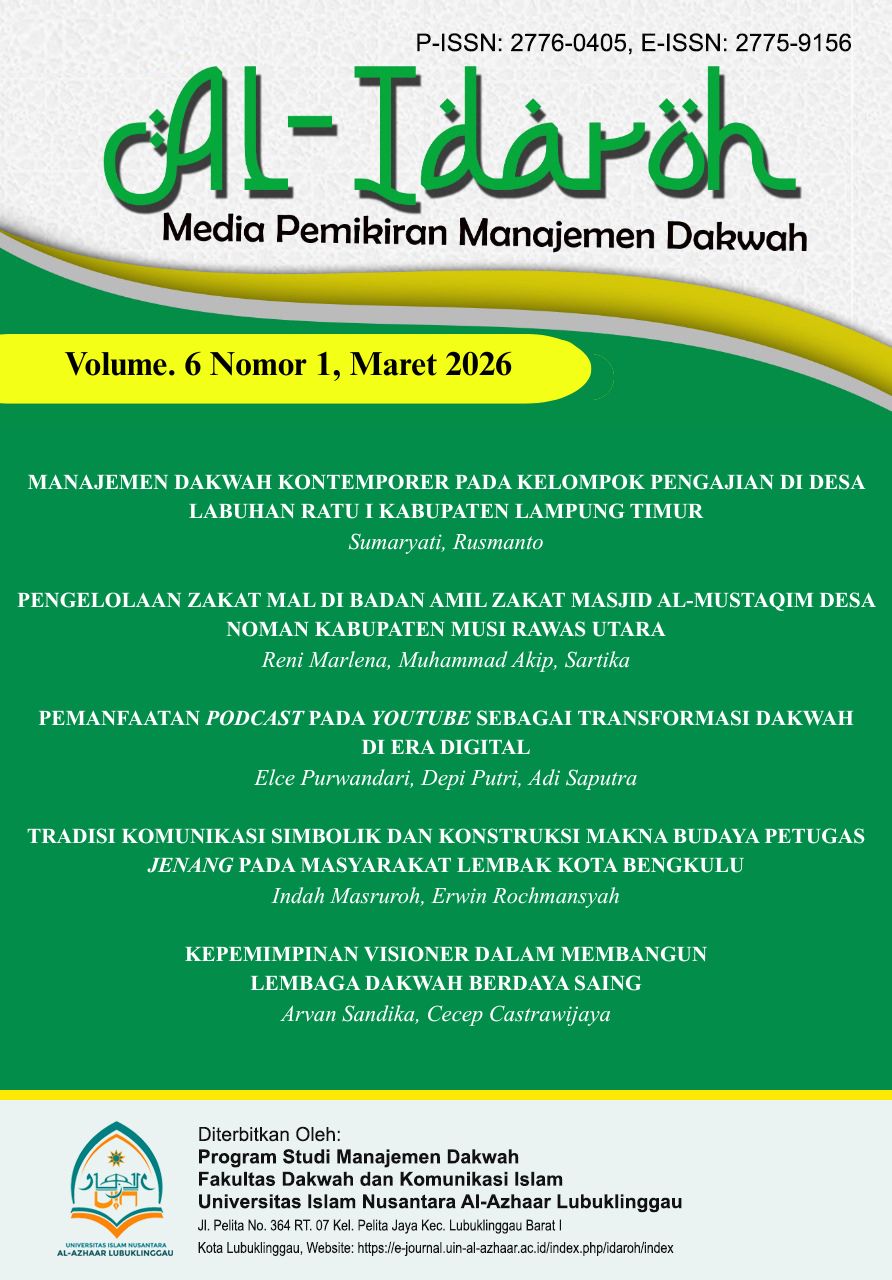
PENGELOLAAN ZAKAT MAL DI BADAN AMIL ZAKAT MASJID AL-MUSTAQIM DESA NOMAN KABUPATEN MUSI RAWAS UTARA
DOI:
https://doi.org/10.53888/alidaroh.v6i1.1016Abstract
A good management strategy for zakat maal funds will create public trust so that they will be encouraged to channel their funds to zakat amil bodies rather than channeling them to mustahik. This direct distribution is closer to consumptive use, thereby somewhat obscuring productive purposes. But in reality, the management of zakat in mosques is not yet running properly, this can be seen from the recording process, annual data collection as well as supervision by competent people. The problem formulation for this research is: 1) What is the Zakat Maal Management Strategy at the Al-Mustaqim Mosque, Noman Village, North Musi Rawas Regency? 2) What are the inhibiting and supporting factors for the Al-Mustaqim Al-Mustaqim Mosque, Noman Village, North Musi Rawas Regency. In this research, an approach known as a qualitative approach was used. This type of research is qualitative research. Research is descriptive research in the form of written or spoken words from people and the behavior observed is in accordance with facts in the field. The research results show. Based on the research results, it can be concluded that the community's understanding of the obligation to pay zakat in Noman Village is lacking. The lack of public understanding is due to the lack of socialization and information obtained from the Zakat Amil Agency, causing the public to not know what zakat maal is. The community's understanding of the Amil Zakat Agency in Noman Village is that the community only knows that there is an obligation to pay zakat fitrah but does not understand about zakatr maal in detail. Only some people understand about zakat maal, some even don't know about zakat maal and its calculations. Most people do not know how to calculate the required zakat maal for zakat paid. The lack of understanding from the public is due to the lack of information obtained from the Amil Zakat Agency and media such as television, print media and social media which causes the public to not know what the Amil Zakat Agency is and what zakat must be paid.
Downloads
Published
How to Cite
Issue
Section
 Abstract Views: 87
|
Abstract Views: 87
|  File Views: 64